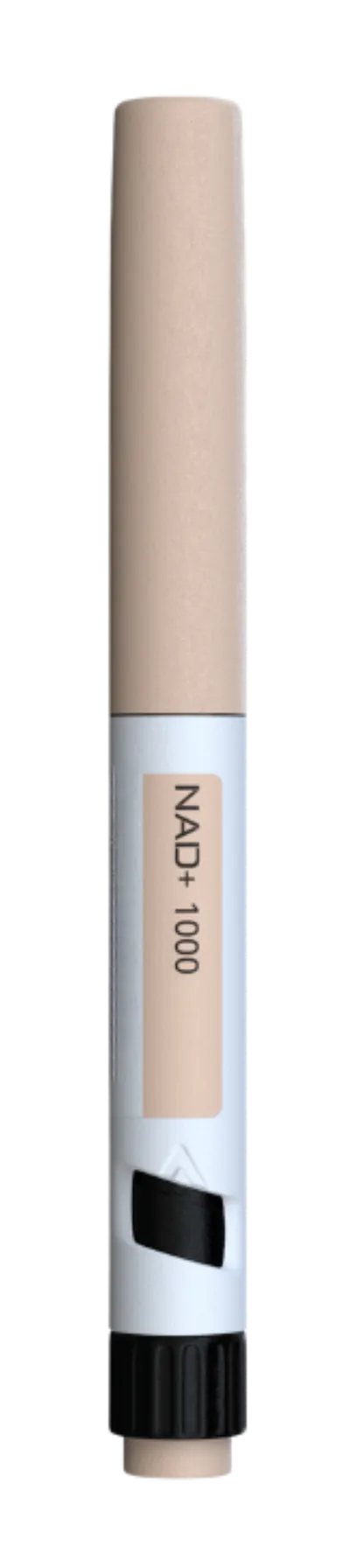
NAD+ (Nicotinamide Adenine Dinucleotide) is a coenzyme central to cellular metabolism, energy production, and DNA repair signalling. Unlike most products in the BodyPharm catalogue, NAD+ is a dinucleotide rather than a peptide, and verification methodology differs because of its distinct chemistry. The Certificate of Analysis on this page documents HPLC purity of the NAD+ molecule in the pen formulation at 98.86% with 343.1 mg/ml concentration - the highest concentration in the catalogue, reflecting the 1000mg fill specification.
In-House Testing
BodyPharm laboratory
- Report
- #251202
- Batch
- NA18003
- Purity (HPLC)
- 98.86%
- Concentration
- 343.1 mg/ml
Testing Methodology
HPLC Purity Verification for a Dinucleotide
BodyPharm in-house report #251202 documents Reverse-Phase HPLC analysis of batch NA18003 at 98.86% purity. NAD+ is a dinucleotide (not a peptide) consisting of nicotinamide and adenine moieties linked through phosphodiester bonds and a ribose-phosphate-ribose backbone. RP-HPLC at acidic mobile phase pH resolves NAD+ from common synthesis or hydrolysis byproducts including NADH (the reduced form), nicotinamide, and ADP-ribose. The 343.1 mg/ml concentration reflects the high fill density required to deliver 1000mg of NAD+ within the pen volume.
Hydrolysis and Solution Stability
NAD+ is hydrolytically less stable than most peptides because the phosphodiester linkages can cleave in aqueous solution at non-ideal pH, producing nicotinamide mononucleotide (NMN) and adenosine monophosphate (AMP) as primary degradation products. The pen formulation is buffered to a pH range that minimises hydrolysis at refrigerated storage. The HPLC test is performed shortly after fill, and the per-batch report reflects the integrity of the dinucleotide at dispatch. Reconstitution timing is therefore not a concern with the pre-filled pen format.
Reduced vs Oxidised Form Identification
NAD+ exists in equilibrium with its reduced form NADH in biological systems, but the COA verifies the oxidised form (NAD+) is the predominant species in the pen formulation. NAD+ and NADH have distinct retention times on RP-HPLC and absorb differently in the UV: NAD+ absorbs at 260 nm only, while NADH has an additional absorbance peak at 340 nm. The chromatogram and UV trace data confirm the oxidised form predominates in the verified material.
What This Result Means for Researchers
NAD+ research has accelerated as evidence has accumulated linking NAD+ availability to mitochondrial function, sirtuin activity, and PARP-mediated DNA repair. Research from institutions including Harvard has documented age-associated decline in tissue NAD+ concentrations in mammalian models, with implications for metabolic, neurological, and longevity research. NAD+ research applications include sirtuin pathway investigation, PARP-mediated DNA repair studies, and mitochondrial metabolism research. The BodyPharm 1000mg pen supports extended research protocols where higher cumulative material is required. Research applications via different administration routes (intravenous and subcutaneous in research models) may produce different pharmacokinetic profiles, and researchers should reference batch-specific COA data when correlating outcomes to verified material.
Frequently Asked Questions
Related Products
NAD+ 1000 Pen
NAD+ 1000mg pre-filled research pen with HPLC-verified purity at 98.86%, dinucleotide coenzyme research compound.